This topic sets out what a driver must do before, during and after driving. You must not drive when very tired, injured, upset or under the influence of alcohol, drugs or medication that affects driving, which carries 24 penalty points. Avoid distractions such as eating, drinking or using devices. Before setting off, check windows, lights, mirrors and tyres, and adjust your seat and mirrors. The questions also cover use of signals and the horn, banned multi-tone horns, carrying people in cargo areas, breakdown warnings, and locking the car when leaving it.
Correct answer: D. You must not drive when injured, sick, very tired, distracted, or irritable.Source: Handbook p. 83
Question 2You have injured your arm and cannot use it properly. What should you do?
ANot drive ✓(correct answer)
BDrive only on highways
CDrive only on short trips
DDrive slowly with one hand
Correct answer: A. You must not drive when you are injured and cannot use your arms or legs properly.Source: Handbook p. 83
Question 3You are very angry and irritable after an argument. According to the handbook, should you drive?
ANo, you must not drive in a state of irritability ✓(correct answer)
BYes, but only with music on
CYes, if you drive faster to get home
DYes, driving will calm you down
Correct answer: A. The handbook lists irritability among the states in which you must not drive.Source: Handbook p. 83
Question 4You are taking a new medication. What should you do before driving?
ATake a double dose to recover faster
BDrink coffee to cancel its effect
CNothing; medicines never affect driving
DRead the leaflet carefully, because you must not drive under the influence of medication ✓(correct answer)
Correct answer: D. You must not drive under alcohol, drugs or medication; if taking medicine, read the leaflet carefully.Source: Handbook p. 83
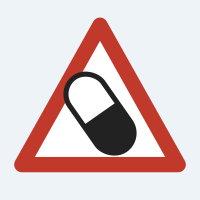
Question 5What does this sign on a medicine package warn you about?
APharmacy ahead
BDo not take medicine while parked
CCertain medicines may affect your ability to drive ✓(correct answer)
DHospital zone
Correct answer: C. The sign means certain medicines may affect your ability to drive; read the leaflet and don't drive under their influence.Source: Handbook p. 83
Question 6How many points is a driver given for driving under the influence of alcohol, drugs and/or medication?
A24 points ✓(correct answer)
B6 points
C12 points
D8 points
Correct answer: A. Driving under the influence of alcohol, drugs and/or medication is scored 24 points.Source: Handbook p. 83
Question 7Which of these is a distraction you should avoid while driving?
AKeeping both hands on the wheel
BChecking your mirrors
CWatching the road ahead
DEating and drinking ✓(correct answer)
Correct answer: D. Avoid distractions such as operating devices inside the vehicle, using a mobile phone, eating and drinking.Source: Handbook p. 84
Question 8You want to change the navigation destination while driving. What is the safest choice?
AStop safely first, because operating devices while driving is a distraction ✓(correct answer)
BDo it at the next green light while moving
CDo it while steering with your knee
DDo it quickly while driving
Correct answer: A. Operating devices inside the vehicle is a distraction to avoid while driving.Source: Handbook p. 84
Question 9What must the driver make sure of before driving?
AThat the vehicle has been washed
BThat the fuel tank is completely full
CThat the necessary equipment is present and the vehicle is in good, safe condition ✓(correct answer)
DThat the radio works
Correct answer: C. Before driving, ensure all necessary equipment is available and the vehicle is safe and won't endanger others.Source: Handbook p. 85
Question 10Which check belongs to the driver's obligations before driving?
AChecking the engine oil brand
BCleaning the windows, lights and mirrors and checking the lights, controls and brakes ✓(correct answer)
CAdjusting the radio stations
DChecking the vehicle registration date
Correct answer: B. Before driving: clean windows, lights and mirrors; check for damage to them and the tires; check lights, controls and brakes.Source: Handbook p. 85
Question 11Before driving, you should check the windows, lights, mirrors and tires for:
ABrand
BDamage ✓(correct answer)
CDust only on the inside
DColour
Correct answer: B. Ensure there is no damage to the windows, lights, mirrors and tires.Source: Handbook p. 85
Question 12What should you do after getting into the driver's seat and before setting off?
AMake sure your sitting posture is correct, adjust the mirrors and fasten the seat belt ✓(correct answer)
BFasten the seat belt only on highways
CStart driving and adjust the mirrors while moving
DAdjust the mirrors only if passengers ask
Correct answer: A. Make sure your sitting posture is correct, adjust the mirrors and fasten the seat belt — driver and passengers.Source: Handbook p. 86
Question 13Which is an obligation of the driver while driving?
ADrive on the paved area, in the appropriate lane, within the speed limit ✓(correct answer)
BDrive on the shoulder when traffic is slow
CDrive at the speed of the car in front
DUse any lane you like
Correct answer: A. Follow the traffic rules: drive on the paved area of the road, stay in the appropriate lane, and keep to the speed limit.Source: Handbook p. 87
Question 14Why should you use the turn signal before turning left or right?
ATo let other road users know what you are going to do ✓(correct answer)
BTo ask for priority
CIt is only needed at night
DOnly to pass the driving test
Correct answer: A. Let other drivers know what you are going to do — don't forget to signal before going left or right.Source: Handbook p. 87
Question 15When may the horn and other warning signals be used?
AAt weddings and celebrations
BTo greet friends
COnly as warning signals, without disturbing pedestrians or the surroundings ✓(correct answer)
DTo ask the car in front to move faster
Correct answer: C. Use warning signals only for warning; don't disturb pedestrians or the general atmosphere; no multi-tone horns.Source: Handbook p. 88
Question 16Which type of horn is prohibited?
AHorns with multiple tones or beeps ✓(correct answer)
BHorns on emergency vehicles
CThe vehicle's standard horn
DAny horn used to warn of danger
Correct answer: A. Do not use warning devices with multiple tones or beeps.Source: Handbook p. 88
Question 17You are driving downhill. Is it acceptable to switch off the engine to save fuel and let the car roll?
AYes, if no one is behind you
BNo, you must not switch off the engine while driving or let the vehicle roll with the engine off ✓(correct answer)
CYes, if you keep your foot on the brake
DYes, on long slopes only
Correct answer: B. Do not turn off the engine while driving, and do not let the vehicle roll down a slope with the engine off.Source: Handbook p. 88
Question 18Which of these is prohibited on a vehicle?
APlacing inscriptions, drawings or advertisements on it ✓(correct answer)
BWorking rear lights
CA clean windshield
DA child seat in the back
Correct answer: A. Do not place inscriptions, drawings or advertisements on the vehicle, and do not attach covers or blinds.Source: Handbook p. 88
Question 19Which of the following is listed among the driver's prohibitions?
AKeeping a first-aid kit
BUsing the turn signals
CAttaching covers or blinds to the vehicle ✓(correct answer)
DUsing the air conditioning
Correct answer: C. Prohibited: making noise, attaching covers or blinds, inscriptions/ads, and obstructing other road users.Source: Handbook p. 88
Question 20The driver must not ___ the movement of other vehicles or road users.
ASignal to
BFollow at a safe distance
CWatch
DObstruct ✓(correct answer)
Correct answer: D. The driver must not obstruct the movement of other vehicles or other road users.Source: Handbook p. 88
Question 21Is it allowed to carry people in the open cargo bed of a pickup?
AYes, if they hold on tightly
BYes, for short distances
CYes, at low speed
DNo, people must not be carried outside the passenger space ✓(correct answer)
Correct answer: D. Do not carry people outside the passenger space; passengers are prohibited in the trunk or any external part of the vehicle.Source: Handbook p. 89
Question 22Which is prohibited on public roads?
AUsing the turn signal
BStopping at a red light
CWashing or repairing the vehicle ✓(correct answer)
DParking in a designated parking space
Correct answer: C. Do not wash or repair the vehicle on public roads.Source: Handbook p. 89
Question 23Which behaviour is prohibited while driving?
AListening to the radio quietly
BUsing the air conditioning
CSpitting or throwing garbage out of the vehicle ✓(correct answer)
DOpening the window for fresh air
Correct answer: C. Do not spit or throw garbage out of the vehicle while driving.Source: Handbook p. 89
Question 24When may vehicles be used in processions, rallies or parades?
AOnly with permission from the authorities ✓(correct answer)
BDuring national holidays without permission
CNever, even with permission
DWhenever a group of friends agrees
Correct answer: A. Vehicles must not be used in processions or parades unless permitted by the authorities.Source: Handbook p. 89
Question 25Your car develops a fault that could affect traffic while you are driving. What should you do?
AStop where you are and call for help
BClear the road immediately and move to a side street where traffic is not obstructed ✓(correct answer)
CStop in the fast lane and switch on the hazard lights
DKeep driving at normal speed to the workshop
Correct answer: B. In the event of a malfunction affecting traffic, clear the road immediately and drive onto a side street.Source: Handbook p. 89
Question 26Your vehicle breaks down on the road during the day. Where should you place a warning sign?
ANext to your rear bumper
BDirectly on the bonnet
CNo warning sign is needed in daylight
DWithin the stopping distance, clearly visible ✓(correct answer)
Correct answer: D. During the day: place a clear warning sign within the stopping distance (after removing and securing the vehicle if possible).Source: Handbook p. 89
Question 27Your vehicle breaks down at night. In addition to the warning sign, what must you do?
ANothing more is needed
BUse only the high beams
CAlso secure the vehicle with red lights ✓(correct answer)
DTurn off all lights to save the battery
Correct answer: C. At night, also secure the broken-down vehicle with red lights.Source: Handbook p. 89
Question 28What must the driver do when leaving the vehicle?
ALeave the engine running to keep it cool
BLeave the keys inside in case someone needs to move it
CTurn it off, remove the keys and lock it ✓(correct answer)
DLeave the windows open
Correct answer: C. When leaving the vehicle: turn it off, remove the keys and close (lock) the vehicle.Source: Handbook p. 90
Question 29You stop for a minute to buy something from a shop. What should you do with the car?
ALeave a passenger child alone in it with the engine on
BLeave the keys in it but lock the doors
CLeave it running because it's only a minute
DSwitch off the engine, take the keys and lock the car ✓(correct answer)
Correct answer: D. Make sure the vehicle is not left unlocked, the engine isn't running, and the key isn't left inside.Source: Handbook p. 90
Question 30Before opening a car door, the driver and passengers must make sure that:
ANobody is exposed to danger when the door opens ✓(correct answer)
BThe engine is still running
CThe windows are closed
DThe radio is switched off
Correct answer: A. Driver and passengers must ensure that no one is exposed to danger when the vehicle doors are opened.Source: Handbook p. 90
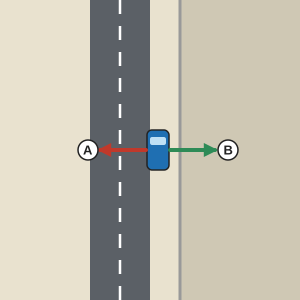
Question 31Your car is parked on the right side of the road. Through which side should passengers get out?
AEither side
BB, the sidewalk side ✓(correct answer)
CWhichever is closest to the passenger
DA, the road side
Correct answer: B. Get out on the sidewalk side so nobody steps into traffic.Source: Handbook p. 90