Right-of-way (priority) rules decide who goes first when two road users want the same space. Signs, traffic lights and traffic officers come first; where none of them control an intersection, the priority rules below apply. Each rule is taken from a practice question, with its handbook page.
Which statement about highways and service roads is correct?
A vehicle leaving the highway for the service road has priority over vehicles on the service road (Handbook p. 146)
On a partially closed two-way road, two drivers meet. Who has priority?
The driver whose side of the road ahead (on the right) is open (Handbook p. 139)
You have priority, but another driver is clearly unable to follow the priority rules. What is recommended?
Make eye contact and give up your right of way if that helps avoid an accident (Handbook p. 154)
Scenarios with diagrams (26)
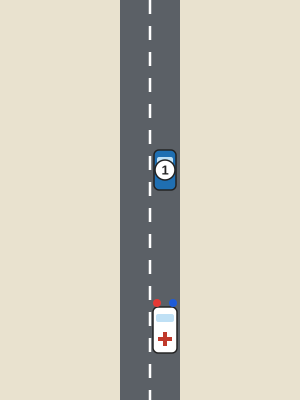
Priority VehiclesYou (car 1) hear a siren and see an ambulance with flashing lights behind you. What should you do?
AMove to the left so it passes on your right
BAccelerate to stay ahead of it
CStop immediately in the middle of the lane
DKeep or move to the right side of the road to let it pass ✓(correct answer)
Correct answer: D. Drivers must stay on the right side of the road and make way when an emergency vehicle approaches.Source: Handbook p. 78 · View in topic
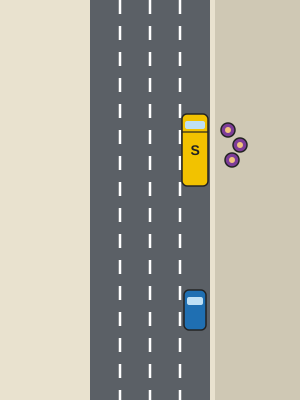
Priority VehiclesYou are the blue car. The school bus ahead has stopped and students are getting off. What must you do?
AOvertake only if no students are on the road
BStop and wait; do not overtake the bus ✓(correct answer)
COvertake it carefully in the left lane
DSound the horn and pass
Correct answer: B. Other vehicles must stop and are prohibited from overtaking school buses when they stop to load or unload students.Source: Handbook p. 79 · View in topic
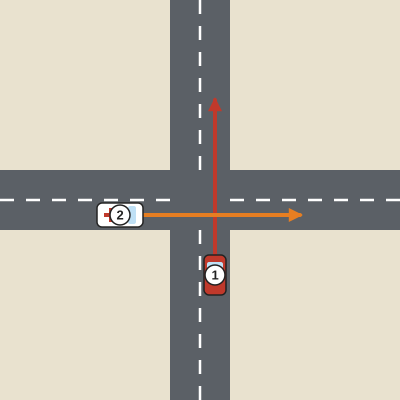
Priority RulesAn ambulance (2) on an emergency call and car 1 reach an intersection without signs at the same time. Who goes first?
ACar 1, because it comes from the ambulance's right
BThe ambulance (2) ✓(correct answer)
CCar 1, because it is going straight
DNeither; both must wait for a traffic officer
Correct answer: B. Car 1 is on the ambulance's right, but emergency vehicles on duty always have priority.Source: Handbook p. 132 · View in topic
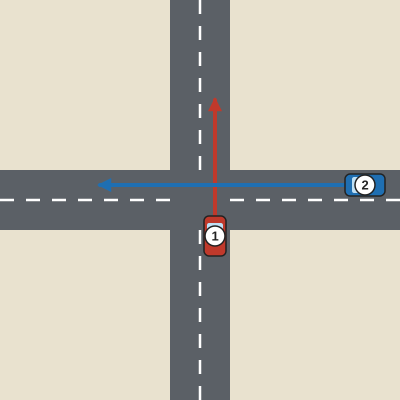
Priority RulesCar 1 is just entering the intersection; car 2 is still far away. There are no signs or lights. Who has priority?
ANeither; both must stop
BCar 2, because it comes from the right
CCar 1, because it is closest and enters first ✓(correct answer)
DCar 2, because it is going straight
Correct answer: C. When vehicles do not arrive at the same time, the vehicle closest to the intersection (entering first) has priority.Source: Handbook p. 134 · View in topic
Priority RulesCar 1 has reached the intersection; car 2 (on car 1's right) is still far away. There are no signs or lights. Who has priority?
AThe car that sounds its horn first
BCar 1, because it is closest to the intersection ✓(correct answer)
CCar 2, because it comes from the right
DCar 2, because it is faster
Correct answer: B. Right-before-left only applies when vehicles arrive at the same time. Here car 1 is clearly closer, so it enters first.Source: Handbook p. 134 · View in topic
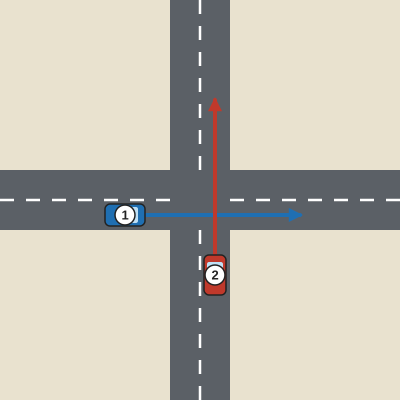
Priority RulesBoth cars reach this equal intersection at the same time. Who has priority?
AWhichever is faster
BCar 1 ✓(correct answer)
CCar 2
DNeither; both must reverse
Correct answer: B. Car 1 approaches from car 2's right, so car 1 has priority (right before left).Source: Handbook p. 135 · View in topic
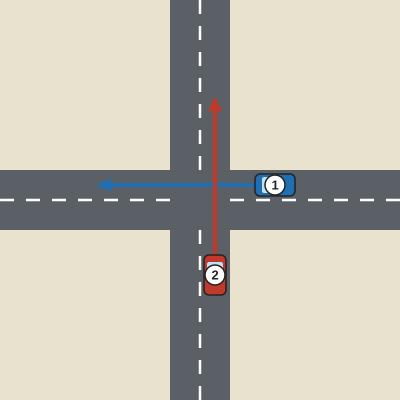
Priority RulesBoth cars reach this equal intersection at the same time. Who has priority?
AWhichever is faster
BCar 2 ✓(correct answer)
CNeither; both must wait
DCar 1
Correct answer: B. Car 2 approaches from car 1's right, so car 2 has priority.Source: Handbook p. 135 · View in topic
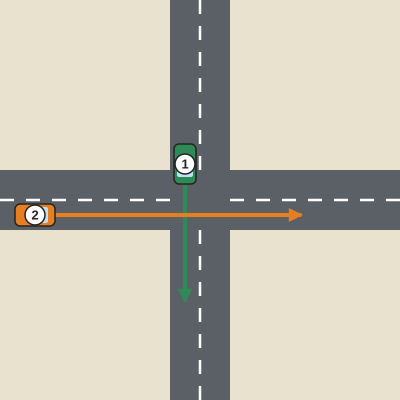
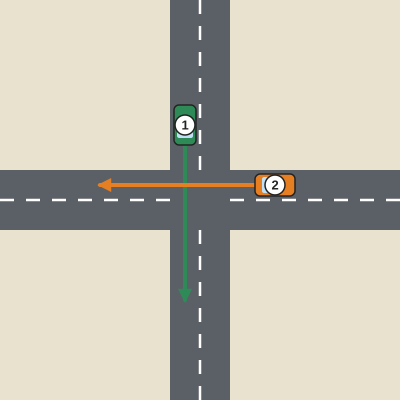
Priority RulesBoth cars reach this equal intersection at the same time. Who has priority?
ACar 1, because it comes from the north
BNeither; both must wait for a traffic officer
CCar 2 ✓(correct answer)
DCar 1
Correct answer: C. Car 1 is heading south, so its right side is the west. Car 2 comes from the west, i.e. from car 1's right, so car 2 goes first.Source: Handbook p. 135 · View in topic
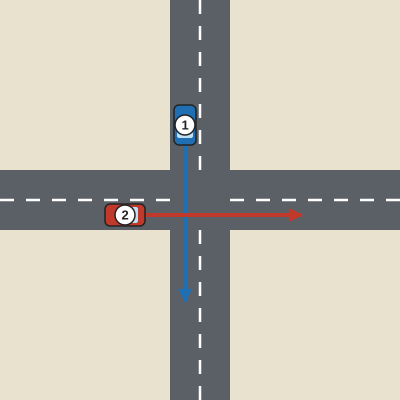
Priority RulesBoth cars reach this equal intersection at the same time. Who has priority?
ANeither; both must wait
BWhichever is faster
CCar 1 ✓(correct answer)
DCar 2
Correct answer: C. Car 2 is heading west, so its right side is the north, where car 1 comes from. Car 1 is on car 2's right and goes first.Source: Handbook p. 135 · View in topic
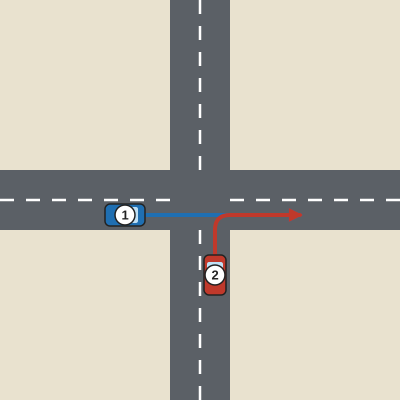
Priority RulesBoth cars arrive at the same time. Car 2 turns right; car 1 goes straight. Who has priority?
ACar 2, because it comes from car 1's right ✓(correct answer)
BCar 1, because it is going straight
CCar 1, because car 2 is turning
DBoth may drive at the same time
Correct answer: A. What matters is the direction a vehicle approaches from, not where it is heading. Car 2 approaches from car 1's right.Source: Handbook p. 135 · View in topic
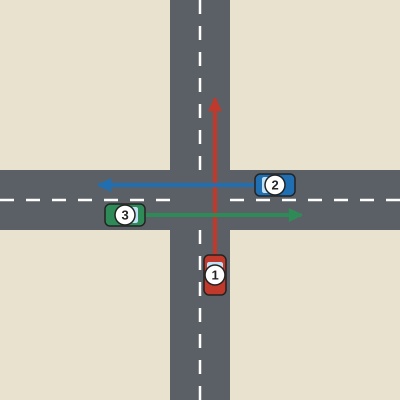
Priority RulesAll three cars reach this equal intersection at the same time and go straight. In what order do they pass?
A2, then 1, then 3 ✓(correct answer)
B2, then 3, then 1
C1, then 2, then 3
D3, then 1, then 2
Correct answer: A. Car 2 has no one on its right, so it goes first. Then car 1 (car 2 was on its right). Car 3 has car 1 on its right, so it goes last.Source: Handbook p. 135 · View in topic
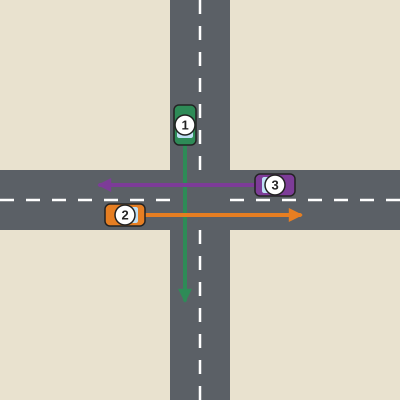
Priority RulesAll three cars reach this equal intersection at the same time and go straight. In what order do they pass?
A1, then 3, then 2
B3, then 2, then 1
C1, then 2, then 3
D2, then 1, then 3 ✓(correct answer)
Correct answer: D. Car 2 (from the west) has nobody on its right (south), so it goes first. Car 1 has car 2 on its right, so it goes next. Car 3 has car 1 on its right, so it goes last.Source: Handbook p. 135 · View in topic
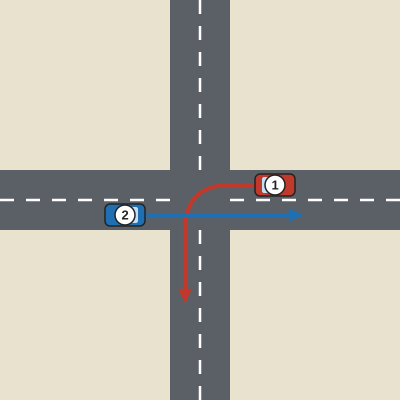
Priority RulesCar 1 wants to turn left; car 2 comes from the opposite direction and goes straight. Who goes first?
ACar 1, because it arrived first
BCar 1, because turning vehicles have priority
CBoth at the same time
DCar 2, because it is going straight ✓(correct answer)
Correct answer: D. A vehicle going straight has priority over an oncoming vehicle turning left.Source: Handbook p. 136 · View in topic
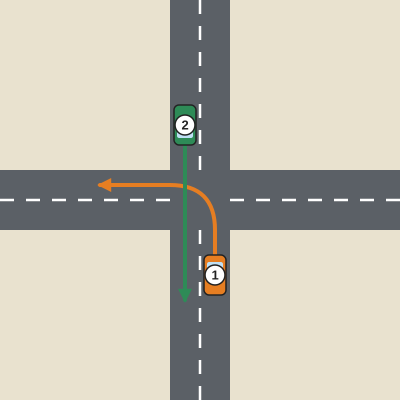
Priority RulesCar 1 wants to turn left; car 2 comes from the opposite direction and goes straight. Who goes first?
ACar 1
BThe faster car
CNeither; both must wait
DCar 2 ✓(correct answer)
Correct answer: D. The oncoming car going straight (car 2) has priority over the car turning left (car 1).Source: Handbook p. 136 · View in topic
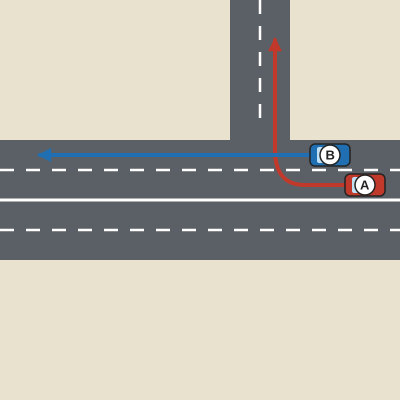
Priority RulesCars A and B drive in the same direction. A wants to turn right into the side road while B continues straight. Who has priority?
AA, because it signalled
BWhichever is ahead
CB, because it is going straight ✓(correct answer)
DA, because it is turning right
Correct answer: C. For vehicles moving in parallel, the driver going straight has priority over the driver who wants to change direction.Source: Handbook p. 137 · View in topic
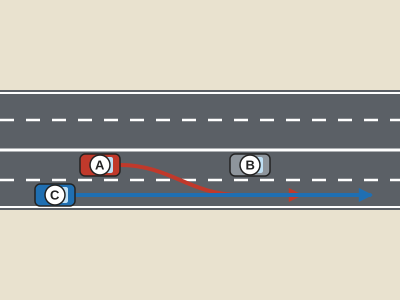
Priority RulesCar A wants to move into the lane where car C is driving straight. Who has priority?
ACar A
BCar C ✓(correct answer)
CWhichever is faster
DCar B
Correct answer: B. The driver going straight ahead (C) has priority over the driver changing lane/direction (A).Source: Handbook p. 138 · View in topic
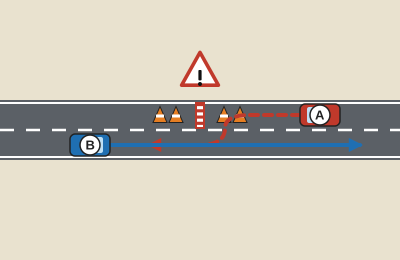
Priority RulesRoad works close part of this two-way road. Cars A and B meet at the obstacle. Who has priority?
AA, because it arrived at the obstacle first
BB, because the road ahead on its side is open ✓(correct answer)
CA, because it is bigger
DBoth may pass at the same time
Correct answer: B. On a partially closed road, priority goes to the driver whose road ahead is open on the right side. The obstacle is in A's lane, so A must wait.Source: Handbook p. 139 · View in topic
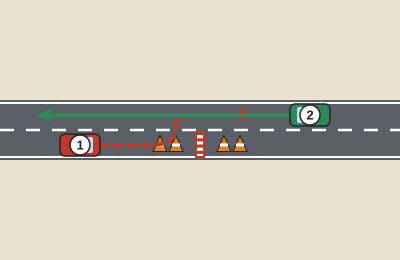
Priority RulesThe obstacle is in car 1's lane. Car 2 comes from the opposite direction. What is correct?
ACar 2 goes first; then car 1 may use the left side to pass the obstacle ✓(correct answer)
BBoth cars must wait for a traffic officer
CCar 1 must turn around
DCar 1 goes first because it must change lanes
Correct answer: A. The driver whose side is open (car 2) has priority. Car 1 may use the left side of the road once it is clear.Source: Handbook p. 139 · View in topic
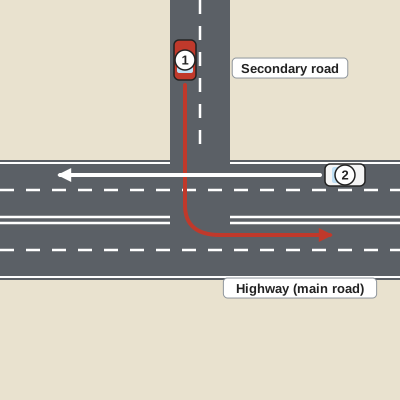
Highway PriorityCar 1 is leaving a secondary road and wants to turn onto the highway. Car 2 is on the highway. Who has priority?
ACar 2, because it is on the highway ✓(correct answer)
BCar 1, because car 2 approaches from car 1's left
CCar 1, because it reached the junction first
DNeither; both must stop
Correct answer: A. The driver on the highway has the right of way over a driver coming from a secondary road. The right-before-left rule only applies between equal roads.Source: Handbook p. 142 · View in topic
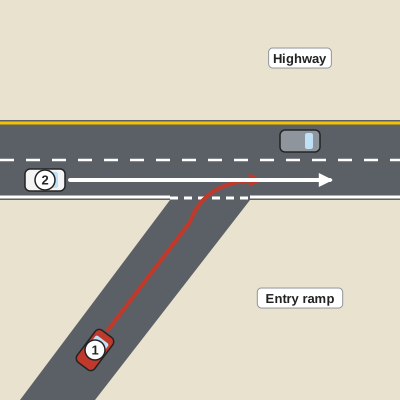
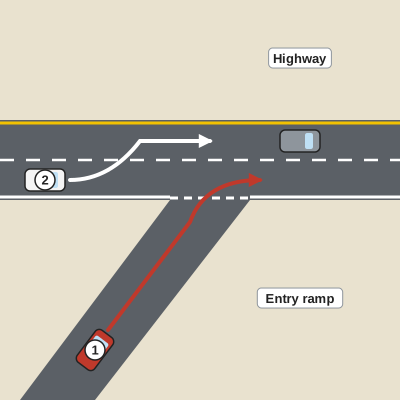
Highway PriorityCar 1 is on the entry ramp joining the highway; car 2 is in the highway's right lane. What must car 1 do?
ASound the horn to warn car 2
BMake sure the road is clear and give way to car 2 ✓(correct answer)
CStop at the end of the ramp in all cases, even if the road is clear
DEnter immediately; car 2 must brake
Correct answer: B. When entering from a secondary road, the driver must ensure the road is clear and give way to vehicles on the highway.Source: Handbook p. 143 · View in topic
Highway PriorityCar 1 is joining the highway from the ramp. Car 2 moves to the left lane to make space for it. How does the handbook describe car 2's behaviour?
AA violation, because car 2 had priority
BCorrect cooperative behaviour ✓(correct answer)
CDangerous, because changing lanes is forbidden on highways
DUnnecessary, because car 1 has priority
Correct answer: B. The driver on the highway must give the driver coming from the secondary road an opportunity to enter - this is correct cooperative behaviour.Source: Handbook p. 144 · View in topic
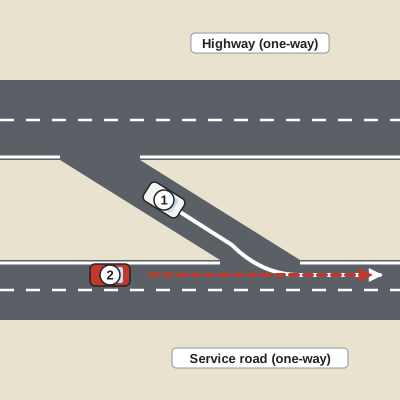
Highway PriorityCar 1 is leaving the highway for the service road. Car 2 is already driving on the service road. Who has priority?
AWhoever is driving faster
BCar 2, because it is on the left
CCar 2, because it is already on the service road
DCar 1, coming from the highway ✓(correct answer)
Correct answer: D. Traffic priority is given to vehicles leaving the highway to the service road.Source: Handbook p. 146 · View in topic
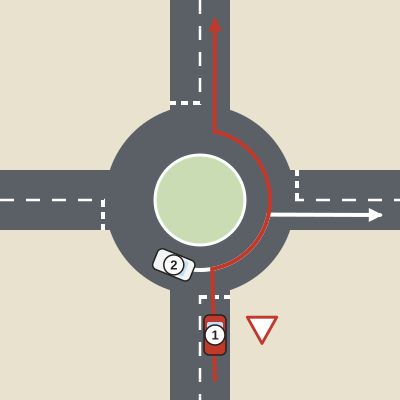
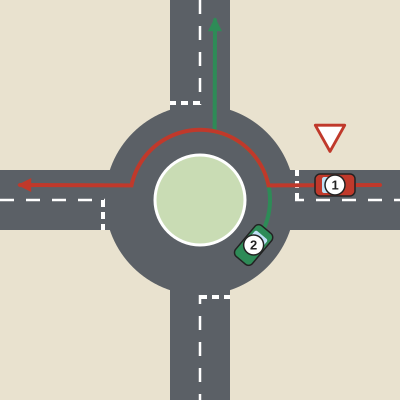
RoundaboutsCar 1 wants to enter the roundabout. Car 2 is already driving around it. Who has priority?
AWhichever car is faster
BCar 1, because it is on car 2's right
CCar 2, because it is already in the roundabout ✓(correct answer)
DCar 1, because it is going straight
Correct answer: C. A driver approaching a roundabout must give way to vehicles travelling around it.Source: Handbook p. 149 · View in topic
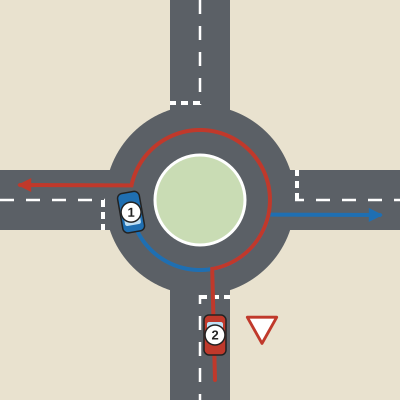
RoundaboutsYou (car 1) are inside the roundabout. Car 2 is waiting at the entry. What happens?
ACar 2 has priority because it is on your right
BYou must stop and let car 2 enter
CYou continue; car 2 must give way to you ✓(correct answer)
DBoth cars must stop and make eye contact
Correct answer: C. Vehicles already circulating have priority; entering drivers must give way.Source: Handbook p. 149 · View in topic
RoundaboutsCar 1 is waiting at the roundabout entry. Car 2 is driving around the roundabout towards that entry. What should car 1 do?
AWait and let car 2 pass before entering ✓(correct answer)
BEnter, because car 2 must give way to entering cars
CEnter quickly before car 2 arrives
DSound the horn so car 2 stops
Correct answer: A. Entering drivers must give way to vehicles travelling around the roundabout.Source: Handbook p. 149 · View in topic
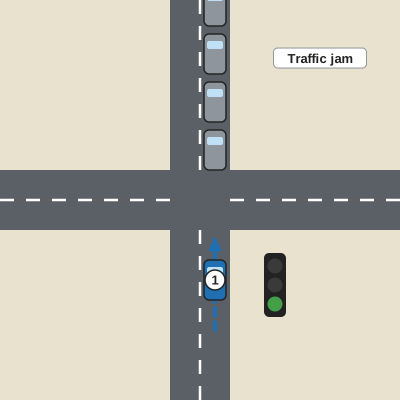
Intersection ConductYour light (car 1) is green, but traffic beyond the intersection is jammed and there is no space to clear it. What should you do?
ATurn on hazard lights and enter slowly
BEnter, because the light is green
CEnter and stop in the middle of the intersection
DWait before the intersection until there is room to clear it ✓(correct answer)
Correct answer: D. If you cannot cross, stop before the intersection even with a green light; if you might get stuck, don't enter at all.Source: Handbook p. 153 · View in topic