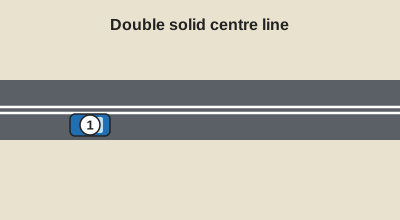
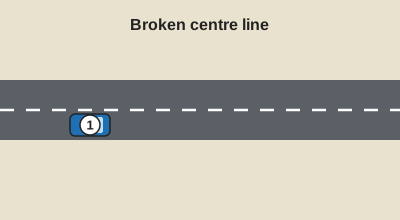
Traffic routing elements are the tools used to secure, route and manage traffic. This short topic includes traffic lights, traffic signs and road markings such as direction arrows. The questions also make some practical rules clear: you must not cross a solid or double solid line, a broken centre line may be crossed when it is safe, and it is prohibited to move, change or attach posters to traffic signs. Even if a sign blocks the view of your shop, you may not touch it yourself.
Question 1What is the purpose of traffic routing elements?
ATo decorate the roads
BTo secure, route and manage traffic ✓(correct answer)
CTo collect road tolls
DTo measure air pollution
Correct answer: B. Traffic routing elements serve to secure, route and manage traffic.Source: Handbook p. 45
Question 2Which of the following is a traffic routing element?
AA traffic light ✓(correct answer)
BA petrol station
CA billboard advertisement
DA street vendor's stall
Correct answer: A. Traffic routing elements include road signs, columns (bollards), traffic lights and road markings.Source: Handbook p. 45
Question 3Which of these actions is prohibited?
APlacing an advertisement poster on a traffic sign pole ✓(correct answer)
BReading the information on a guide sign
CStopping at a STOP sign
DFollowing direction arrows on the road
Correct answer: A. It is prohibited to place posters or advertisements on poles, lights, road signs or other traffic directing devices.Source: Handbook p. 45
Question 4A road sign is blocking the view of your shop. What are you allowed to do?
ANothing yourself; moving or changing traffic signs is prohibited ✓(correct answer)
BCover it with your shop's banner
CTurn the sign slightly
DMove the sign a few metres
Correct answer: A. Destroying, altering, removing or changing the location of traffic routing elements is prohibited.Source: Handbook p. 45
Question 5Are you allowed to cross a solid or double solid line?
AYes, when overtaking
BOnly at night
CNo, crossing it is prohibited ✓(correct answer)
DYes, if the road is empty
Correct answer: C. Connected (solid) and double solid lines must not be crossed.Source: Handbook p. 45
Question 6What does a broken (dashed) centre line mean?
AIt marks a pedestrian crossing
BIt marks a parking area
CIt may be crossed ✓(correct answer)
DIt must never be crossed
Correct answer: C. Broken lines may be crossed; solid lines may not.Source: Handbook p. 45
Question 7Which of these is a road marking listed in the handbook?
AStreet lights
BTraffic officers
CSpeed cameras
DArrows pointing out directions ✓(correct answer)
Correct answer: D. Prominent road markings: solid/double solid lines, broken lines, pedestrian crossings and direction arrows.Source: Handbook p. 45